
Refractive Surgery
Refractive Surgery
Introduction
Refractive surgery is an advanced vision correction solution for individuals seeking long-term freedom from spectacles and contact lenses. This category includes modern procedures such as LASIK, PRK, SMILE, and lens-based refractive correction, all designed to treat common vision problems including myopia, hyperopia, and astigmatism.
Refractive errors occur when the cornea or natural lens does not focus light correctly onto the retina, resulting in blurred vision. While spectacles provide effective correction, refractive surgery offers a precise and long-lasting surgical alternative. At Focus Eye Centre Faridabad , a complete pre-operative eye evaluation is performed to assess corneal thickness, refractive stability, tear film health, and suitability before any surgical recommendation is made.
Causes
The main indication for refractive surgery is the presence of refractive errors — myopia (difficulty seeing distant objects), hyperopia (difficulty seeing near objects), and astigmatism (distorted vision due to an irregularly shaped cornea). These occur because the eye does not focus light accurately on the retina.
Many patients seek refractive surgery due to increasing spectacle dependence, contact lens discomfort, frequent prescription changes, or professional requirements where glasses are inconvenient. Extended working hours on digital devices and active lifestyles also contribute to the growing demand for permanent vision correction.
Treatment
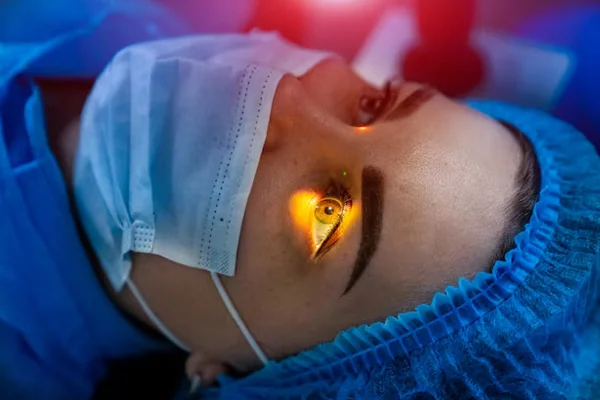
The choice of refractive procedure depends on individual eye characteristics. LASIK reshapes the cornea using laser technology and is suitable for patients with adequate corneal thickness. PRK is recommended when corneal thickness is insufficient for LASIK. SMILE is a minimally invasive laser option using small-incision technology. For high refractive errors, lens-based refractive surgery using implantable contact lenses (ICL) may be the preferred option.
All patients at Focus Eye Centre undergo corneal topography, refraction testing, pupil analysis, and retinal evaluation before surgery to confirm safety and accuracy. Procedures are performed under topical anaesthesia, and most patients experience rapid visual recovery.
Benefits
The primary benefit of refractive surgery is long-term reduction or complete elimination of spectacle dependence. Patients enjoy improved vision clarity, greater convenience during sports, travel, and professional activities, improved confidence, and enhanced daily comfort. Advanced refractive procedures also offer quick recovery, high precision, and stable visual outcomes when performed on appropriately selected candidates.
Frequently Asked Questions
1. Is refractive surgery the same as LASIK?
No. LASIK is one type of refractive surgery. The category includes multiple vision correction procedures such as PRK, SMILE, and implantable lens surgery.
2. Who is a suitable candidate for refractive surgery?
Adults with stable eye power and healthy corneas are generally suitable. A detailed pre-operative evaluation confirms individual eligibility.
3. Is refractive surgery permanent?
Yes. Most refractive procedures provide long-term correction, although natural age-related changes such as presbyopia may occur later in life.
4. How is the most suitable refractive procedure chosen?
The choice depends on corneal thickness, refractive error, tear film health, and overall eye condition, determined during pre-operative assessment.
5. How soon can I resume daily activities after refractive surgery?
Most patients resume normal daily routine within a few days, depending on the specific procedure performed.